 |
|
Hornchurch Scramble
- The Hardest Days - part II
by Robert Taylor
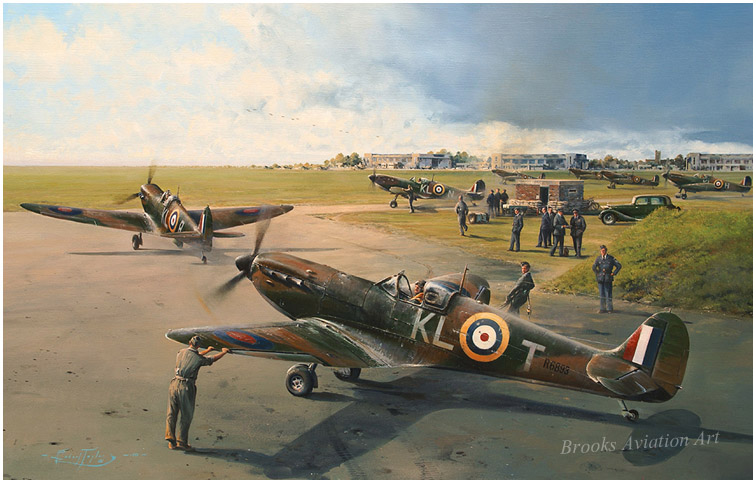
On August 12th, 1940 the Luftwaffe turned their full attention to the RAF's forward fighter bases and radar stations with the intent to obliterate them once and for all. The outcome of the Battle of Britain hung in the balance. It was late in the afternoon of Sunday, Shown here is 54 Squadron's commanding officer, Squadron Leader James Leathart, as he taxis out at Hornchurch to prepare for take-off. Quickly following, the aircraft of New Zealander Colin Gray is guided out from dispersal by his ground crew. Gray would claim 3 Bf110s in the encounter and would eventually become the top scoring New Zealand Ace of the war. Part two of a three print set The Hardest Days commemorating the 70th anniversary of the Battle of Britain. |
| Overall size: 25¼" x 33" | Available in the following editions |
| 450 | Limited edition | Signed by three Battle of Britain Spitfire pilots. | $320 |
| 125 | Anniversary edition | Signed by nine Battle of Britain pilots. | $395 |
| Limited edition signatures | ||
| George Swanwick | Geoffrey Wellum | Tony Iveson |
| Anniversary edition signatures | ||
| George Swanwick | Geoffrey Wellum | Tony Iveson |
| John Freeborn | Tom Neil | Billy Drake |
| Bob Foster | Norman Brown | Roger Morwood |
 |
 |
|
| Air Armada | Valiant Response |