|
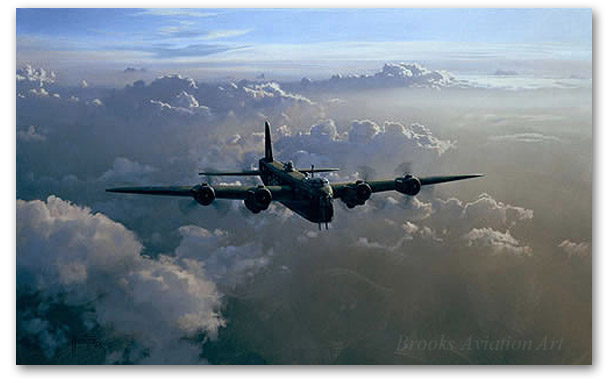
Shorts Stirling BI Famous (or rather infamous) for being designed
to meet a specification for a four engined bomber, one requirement
of which was the aircraft fit into the existing RAF pattern hangars
then in use. This put a maximum wing span of 100ft on the design.
This limit prompted Shorts to use an adaptation of the wing of
their successful Empire flying boats which was not suited to
the high altitude bombing asked of the Stirling later over Germany
First deliveries to a front line squadron were made to No.7
Sdn. in late 1940, and their first operation was on February
10th 41 from Oakington near Cambridge to oil storage tanks
near Rotterdam. Daylight attacks were carried out by Stirling
crews as late as December 41. The true value of the Stirling
was the increase in range from what was available, illustrated
by the first raid to an Italian target, the city of Turin on
September 10th 41. Stirlings also participated on a large
scale in the Thousand Bomber raid to Cologne in May 1942.The
four engined bomber was also extensively used in the important
and difficult task of gardening, the laying of mines
in enemy shipping lanes.
At the end of 43 Stirlings were taken off Main Force Ops,
but used in small numbers for small diversionary attacks until
August 44. It still however had a role to play, namely
as the principle glider tug on the D-day landings, supply dropper
for partisans and SOE agents, and later carrying fuel supplies
for the advance across Germany.
In all, the Stirling dropped some 27,821 tons of bombs in
18,440 sorties. Two Victoria Crosses were awarded to Stirling
Crew members. Shown to be flawed by the four engined heavies
that followed, the Stirling never-the-less fulfilled vital roles
at important times throughout the conflict. She deserves a little
praise. |