|
The Doolittle Raid on Japan
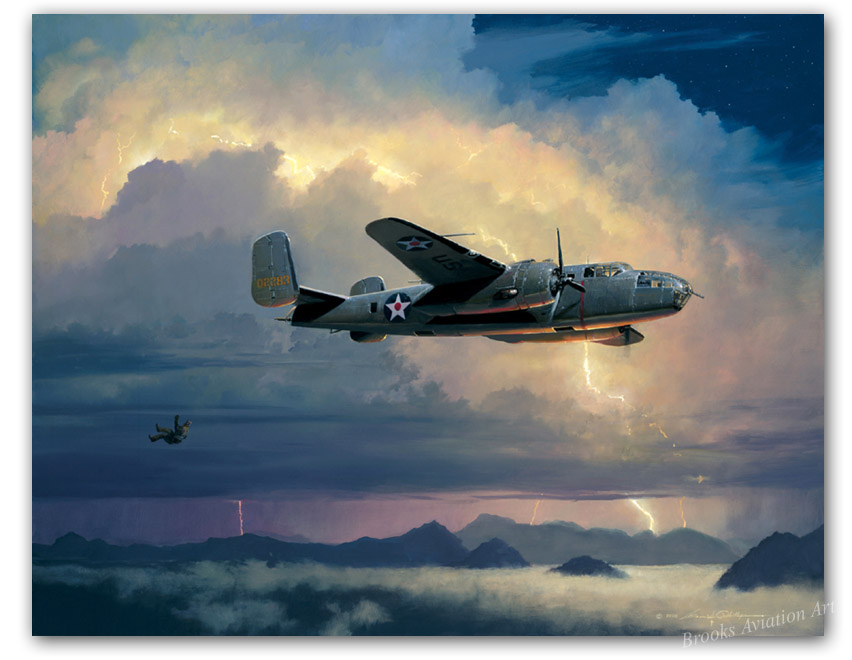
was always designed as a one way mission: from the carrier to
friendly airfields in China by way of Tokyo. Due to early discovery
by Japanese picket boats, Captain David Jones and the rest of
Crew 5 (aircraft 02283) left the deck of the USS Hornet knowing
their one-way trip was perilously shorter. They knew that their
B-25 did not have the range to make those friendly airfields,
and getting to the China coast or past Japanese-occupied China
would take great skill and uncommon luck. At a small break in
the cloud cover over Chu Chow the members of Crew 5, who could
coax their aircraft no further, left the plane, trusting their
parachutes, the wind and the Chinese people to lead them to safety.
In Chinese folklore the lóng,
or dragon, symbolizes all that is good: abundance, prosperity,
good fortune, nobility, and divine protection, as well as the
Chinese people themselves. The dragon is believed to be the benevolent
guardian of water, as well as life-giving rain and storms. As
they tumbled into the stormy night sky, Captain Jones and his
crew entrusted their safetyand their livesto the
arms of the dragon.
The Chinese paid dearly for
the aid and shelter they provided to American soldiers. In the
Zhejiang-Jiangxi Campaign, Japanese forces killed an estimated
250,000 Chinese civilians as retaliation and intimidation to
prevent further assistance of American soldiers. The brave sacrifices
of the Chinese saved many lives and solidified the American people
in their determination to succeed. William S. Phillips inspiring
new limited edition Into the Arms of the Dragon pays tribute
to the combined efforts of two nations. |